How to Build an SEO-Friendly Website Structure

    Architect a logical, highly crawlable, and scalable site hierarchy that empowers search engines to index your content effortlessly. Learn how optimizing information architecture, internal linking, and URL taxonomies converts complex web platforms into high-ranking search powerhouses.

    The Architectural Foundation: Why Website Structure Controls Search Performance

    For enterprise brand leaders, technical SEO strategists, and web development directors, building a sustainable organic search engine presence begins long before the first article is written. It starts with site architecture. An SEO-friendly website structure organizes content in a clean, intuitive, and logical hierarchy that serves two primary audiences simultaneously: search engine crawlers and human visitors. At TY ALPHA, TECHNOLOGY, we recognize that even world-class content will struggle to rank if search engine bots cannot efficiently discover, crawl, and understand how pages relate to one another.

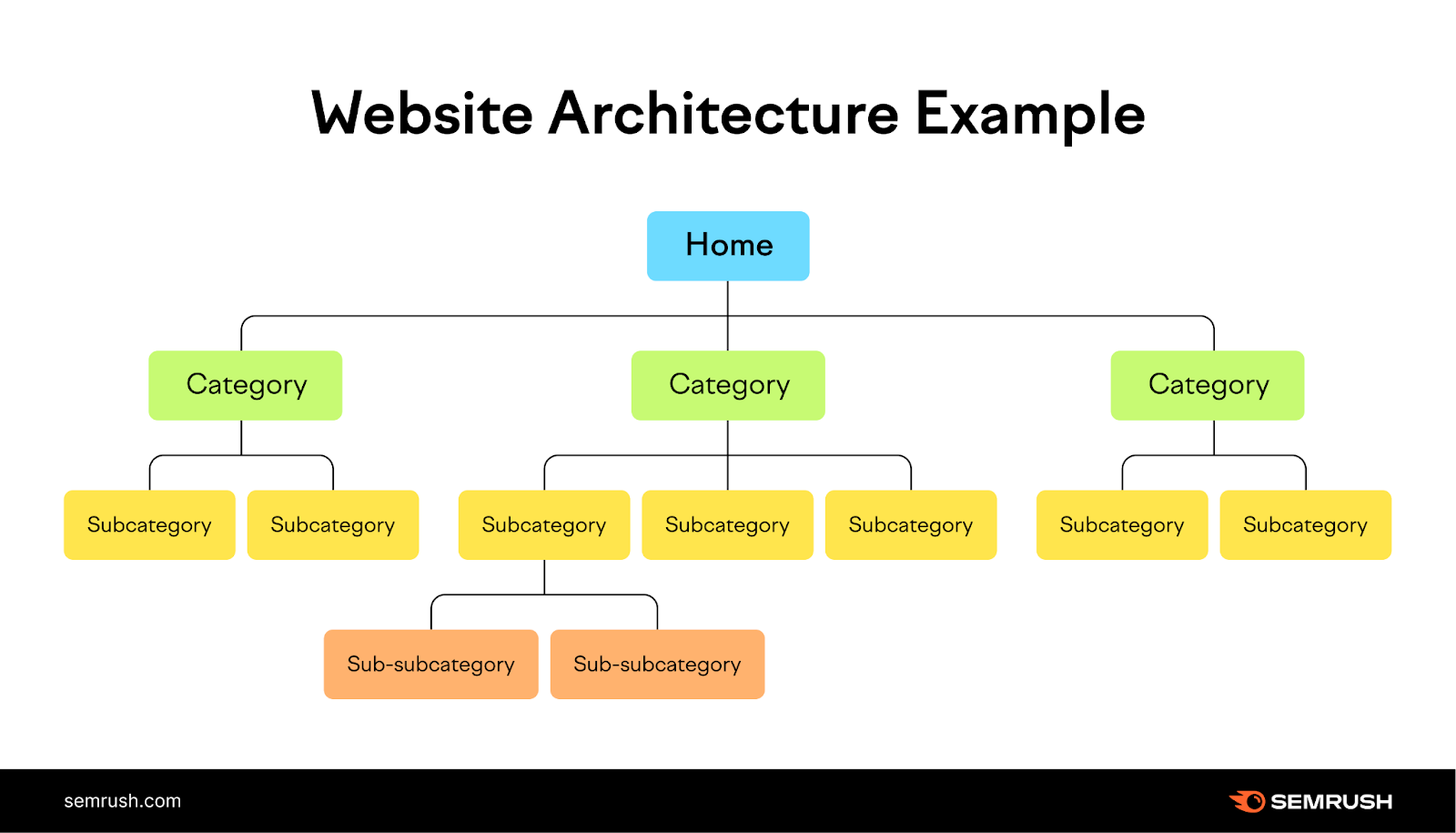
    When search crawlers visit a website with a poorly planned structure—plagued by deep nesting, orphaned pages, or duplicate pathways—they waste critical crawl budget and fail to pass page authority (PageRank) effectively across the domain. Conversely, a streamlined, flat hierarchy ensures that search bots can systematically crawl all primary landing pages within a few clicks from the homepage. This clear visual and technical mapping establishes strong topical clusters, accelerates indexation for new content, and maximizes organic visibility across competitive search landscapes.

    However, engineering a scalable website architecture requires balancing user navigation flow, URL taxonomies, internal link distribution, and canonical structures across complex web properties.

    If you need professional assistance auditing your site architecture, restructuring complex URL taxonomies, or designing a high-performance internal linking framework, our technical team is ready to assist. Click the link at the bottom of the page to connect with our information architecture specialists.

    SEO-Friendly Website Architecture and Information Taxonomy Systems by TY ALPHA TECHNOLOGY

    The Five Essential Pillars of an SEO-Friendly Architecture

    To build a website structure that maximizes search engine crawlability and user engagement, development teams must systematically implement these five foundational pillars:

    • Flat Site Depth & Shallow Click Pathways: Designing a hierarchy where any critical page on the domain can be reached within 3 to 4 clicks from the homepage, conserving crawl budget and preserving page authority.
    • Logical Topic Siloing & Content Hubs: Grouping related subtopics around centralized parent pages (Pillar Pages) to build authoritative topical clusters that signal deep expertise to search engines.
    • Clean, Descriptive URL Taxonomies: Structuring simple, human-readable URLs that reflect site hierarchy without unnecessary dynamic parameters, tracking strings, or redundant subdirectories.
    • Strategic Internal Linking & Anchor Text Flow: Distributing internal link equity deliberately across high-priority landing pages using descriptive, keyword-relevant anchor text.
    • XML Sitemaps & Breadcrumb Navigation: Implementing structured schema breadcrumbs and dynamically updating XML sitemaps to give both crawlers and users clear directional maps of your digital ecosystem.

    The Structural Advantage: Scaling Authority Through Intuitive Architecture

    The primary commercial benefit of executing a well-planned website architecture is creating a self-reinforcing organic growth system. When your information architecture is clean, every new piece of content naturally inherits domain authority from related parent pages, drastically reducing the time it takes for new URLs to rank in top SERP positions.

    Furthermore, a logical site layout vastly improves user experience by lowering bounce rates, extending session durations, and guiding visitors smoothly toward high-converting goal destinations. At TY ALPHA, TECHNOLOGY, we help scaling businesses transform fragmented digital assets into streamlined, highly crawlable web architectures built for long-term search dominance.


    Website Architecture Matrix: Strategies, Focus, and Search Impact

    This structured matrix evaluates the core strategies, technical mechanisms, and long-term SEO benefits of establishing an optimized information architecture:

    Architectural Component Core Technical Focus Impact on Search Indexation & User Experience
    Flat Hierarchy (Shallow Depth) **Click-Depth Minimization.** Keeps primary core pages within 1 to 3 clicks of the root domain homepage. **Maximum Crawl Efficiency.** Ensures search engine spiders crawl high-priority content frequently without burning crawl budget on deep links.
    Topic Clustering (Hub & Spoke) **Semantic Association.** Connects supporting articles to main pillar pages via strict contextual bidirectional links. **Topical Authority Boost.** Establishes comprehensive domain expertise in target niches, helping pages rank for broader keyword variations.
    Structured Breadcrumbs **Navigation & Schema Integration.** Uses JSON-LD BreadcrumbList markup combined with visible interface links. **Enhanced SERP Presentation.** Improves SERP CTR via rich snippet paths while reinforcing page-level category relationships to search bots.
    URL Taxonomy Optimization **Predictable Slug Engineering.** Enforces lowercase, hyphen-separated, folder-organized URL paths (`/category/subcategory/page`). **Crawl Clarity & Usability.** Prevents duplicate content indexing traps, improves link sharing, and communicates instant context to users and bots.

    Navigating Architectural Friction: Overcoming Common Restructuring Risks

    Restructuring an existing website carries technical risks if not handled with precision. A common pitfall during site migrations or taxonomy updates is creating widespread 404 errors, breaking historical backlinks, or generating redirect loops that severely damage organic search visibility. Changing URL paths without mapping flawless 1-to-1 301 redirects will strip away accumulated page authority almost overnight.

    Additionally, enterprise e-commerce platforms often suffer from dynamic URL bloat caused by faceted navigation, filtering parameters, and tag pages. Without strict canonicalization strategies, robots.txt directives, or parameter handling in place, search engines can index thousands of duplicate or low-value pages, diluting overall site quality signals. To safeguard search rankings, architectural updates must undergo thorough staging environments and pre-launch crawl validations.


    Building an SEO-Friendly Structure: A 6-Step Implementation Guide

    To design, implement, and maintain an optimized information architecture across your web platform, follow these six execution steps:

    1. Map Keyword Intent to Content Hierarchy

    Conduct comprehensive keyword research to organize target search terms into broad core categories, secondary subtopics, and specific long-tail queries.

    2. Design a Flat Information Architecture Map

    Draft a visual site map ensuring every core landing page sits within 3 clicks from the homepage, avoiding unnecessarily deep subfolder nesting.

    3. Establish Standardized URL Taxonomies

    Define clear, static, hyphenated URL path guidelines that mirror the site hierarchy logically across all categories and subcategories.

    4. Build Contextual Internal Link Silos

    Implement bidirectional internal linking between supporting blog content and primary parent hub pages using keyword-descriptive anchor text.

    5. Implement Breadcrumb Navigation with JSON-LD Schema

    Add user-facing breadcrumbs to all subpages and validate their BreadcrumbList structured data to ensure proper rich snippet rendering in search results.

    6. Audit Crawlability and Validate Sitemaps

    Perform complete site audits using crawler tools to verify internal PageRank flow, eliminate orphan pages, clean redirect chains, and submit updated XML sitemaps.


    Ready to Re-Architect Your Website for Maximum Search Visibility?

    Building an SEO-friendly website structure is a vital strategic milestone—it eliminates crawl barriers, maximizes internal link equity distribution, and provides the scalable foundation needed for long-term organic growth.

    If your business requires a technical site architecture audit, URL taxonomy restructuring, or a complete migration strategy, we are ready to assist. The technical SEO and engineering team at TY ALPHA, TECHNOLOGY excels at building clean, highly scalable digital platforms designed to achieve sustained SERP leadership.