What Is Headless Ecommerce Architecture?
A simplified explanation of separate frontend interfaces and backend cloud databases.
Read Strategy
Draft clear return terms that protect merchants while keeping consumers happy.
Building a successful online brand is not just about driving traffic and securing the initial transaction; it is about building sustainable, long-term customer relationships. In e-commerce, where consumers cannot physically touch or try products before buying, a transparent refund and return policy serves as the bedrock of trust. It is the ultimate safety net that converts hesitant, first-time store browsers into confident, repeat buyers.
For any scaling business, a well-structured refund policy does far more than satisfy consumer protection regulations. When written strategically, it establishes clear operational guidelines, reduces costly chargebacks, minimizes customer support tickets, and deters return fraud. Instead of viewing returns as an inevitable financial loss, smart merchants use their refund systems as a marketing advantage, proving to their customers that the brand stands firmly behind the quality of its products.
At TY ALPHA, TECHNOLOGY, we understand that drafting legally compliant yet customer-centric return terms can be challenging. We have compiled a comprehensive guide and structured framework to help you set up an optimized refund policy that secures your merchant margins while maintaining stellar consumer satisfaction.

An effective return policy must be easy to read and legally robust. When defining your store's terms, ensure you integrate these core structural components:
An e-commerce business with an intentionally designed return policy operates with a **highly secure and customer-friendly model**. If your refund guidelines are overly restrictive, vague, or buried deep within your website's footer, shoppers will abandon their carts out of frustration. Conversely, if your policy is too lenient, you open your business to "wardrobing" (buying items to use once and return) and malicious return fraud, which quickly erodes your profit margins.
By offering a clean, structured, and easy-to-locate return process, you naturally mitigate merchant risk. Clear definitions of return windows, restocking fees, and refund types (e.g., cash refund vs. store credit) give your customer service team a solid operational playbook to resolve disputes amicably and professionally.
At TY ALPHA, TECHNOLOGY, we remove the complexity from digital retail administration. We assist brands in integrating automated return portals and crafting balanced refund terms that keep checkout conversions high without sacrificing operational security.
A high-performing online storefront relies on smooth transaction management. Here is how we identify common policy loopholes and resolve them with proactive, merchant-first structures:
| Potential Policy Loophole | Practical System Solution | Direct Strategic & Financial Impact |
|---|---|---|
| Abuse of Return Windows | Set a strict "X-days from delivery date" policy tracked automatically via carrier API integrations. | Prevents seasonal return abuse and ensures your inventory can be restocked and resold quickly. |
| High Shipping Overhead | Provide free returns only via store credit; charge a flat shipping deduction fee for original payment refunds. | Protects cash flow, reduces outward shipping losses, and incentivizes shoppers to keep their money in your ecosystem. |
| "Wardrobing" & Damaged Returns | Mandate that items must be returned with security tags attached, in original packaging, and subject to inspection. | Reduces fraudulent returns of used goods, ensuring your returned inventory remains in pristine, sellable condition. |
| Frequent Chargebacks | Make the return process effortless and visible, offering instant customer support chat options at checkout. | Encourages customers to request refunds directly through you rather than initiating forced disputes with their banks. |
| International Shipping Friction | Establish localized return centers or restrict international returns to store credit only. | Eliminates high international customs duties and complex cross-border transit costs for minor returns. |
Automating your return system is crucial for saving administrative hours, but overloading your store with heavy third-party return management widgets, tracking scripts, and complex portal embeds can slow down your site's performance. Just as slow speeds damage your Core Web Vitals, they also increase cart abandonment. If a shopper struggles to load your policy pages or return portal, they will lose trust in your platform's reliability.
To preserve peak performance, we recommend building lightweight, static policy pages that load instantly across all devices. When dynamic self-service return portals are integrated, they should be configured to run asynchronously or hosted on optimized subdomains. This ensures that your main storefront remains lightning-fast, highly responsive, and fully optimized to secure checkouts while still offering customers a flawless, self-service return experience.
By combining high-speed web infrastructure with a clear, automated refund pipeline, you eliminate the friction that holds back your store's conversions. This balanced, performance-driven setup protects your margins, speeds up page load times, and ensures your brand remains competitive.
Treating your refund policy as an afterthought is a costly mistake. If shoppers feel that returning an incorrect or defective product is an uphill battle, they will never buy from your store again—and they may leave negative reviews that permanently damage your brand's reputation online. On the other hand, an expertly communicated, transparent return policy acts as an active sales driver. It alleviates purchase anxiety immediately, giving customers the confidence to order higher-value items.
When your refund policy, technical portal integrations, and fast page speeds work in perfect harmony, your brand value grows naturally. Customers complete checkout with peace of mind, administrative work is automated, and your retention rates increase. A simplified return strategy balances secure merchant protection with customer-first policies to build a resilient, scaling business.
To systematically write, implement, and automate a high-converting refund policy without causing administrative confusion or reducing your margins, we follow a simple 6-step roadmap:
We analyze your average order value, product margins, and shipping costs to determine the most profitable return framework for your brand.
We draft a clear, easy-to-read, and legally compliant refund policy that aligns with your brand's voice and local consumer protection laws.
We strategically position your policy links across high-intent touchpoints, including your website footer, product pages, FAQ section, and checkout flow.
We set up a lightweight, self-service return portal that allows customers to generate pre-paid shipping labels and submit photo requests autonomously.
We configure backend rules to automatically flag final-sale products, calculate restocking fees, and route return packages to the correct warehouses.
We monitor return metrics and customer feedback regularly, refining your return thresholds to minimize overall product return rates over time.
Transitioning from a basic webpage to a fully optimized, high-converting retail storefront is a major milestone—it is a bold step toward financial independence, brand recognition, and tapping into a global network of digital consumers.
Whether you are building on Shopify, WooCommerce, or developing a fully custom e-commerce system, we are here to support your growth. If you run into any technical layout conflicts, require assistance connecting complex regional payment gateways, or want professional advice on accelerating your store’s loading speeds, we have you covered. The team at TY ALPHA, TECHNOLOGY specializes in keeping digital architecture clear, simple, and perfectly secure, helping global entrepreneurs build robust online ecosystems designed for sustainable international scaling.
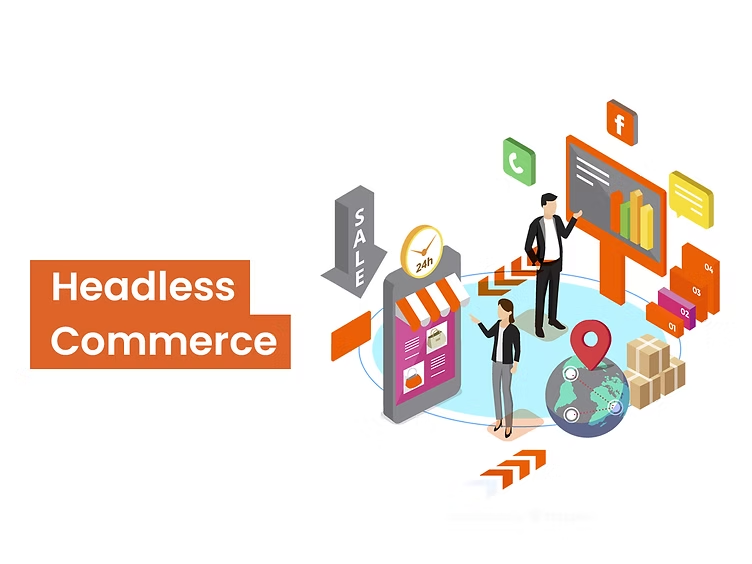
A simplified explanation of separate frontend interfaces and backend cloud databases.
Read Strategy
Overcome language barriers and international payment challenges to scale your brand.
Read Strategy