What Is a Physical Business Address and Why Do Digital Banks Require It?

    A comprehensive technical, legal, and compliance guide to physical business address requirements, FinCEN AML/KYC mandates, and digital banking onboarding for global entrepreneurs.

    Understanding US Financial Compliance: Physical Business Address Essentials for Global Founders

    As international businesses and non-resident entrepreneurs scale their operations into the United States, establishing a functional corporate treasury is a critical milestone. Modern neobanks and digital-first financial platforms have revolutionized access to US dollar accounts, enabling founders worldwide to manage treasury operations without visiting a physical branch.

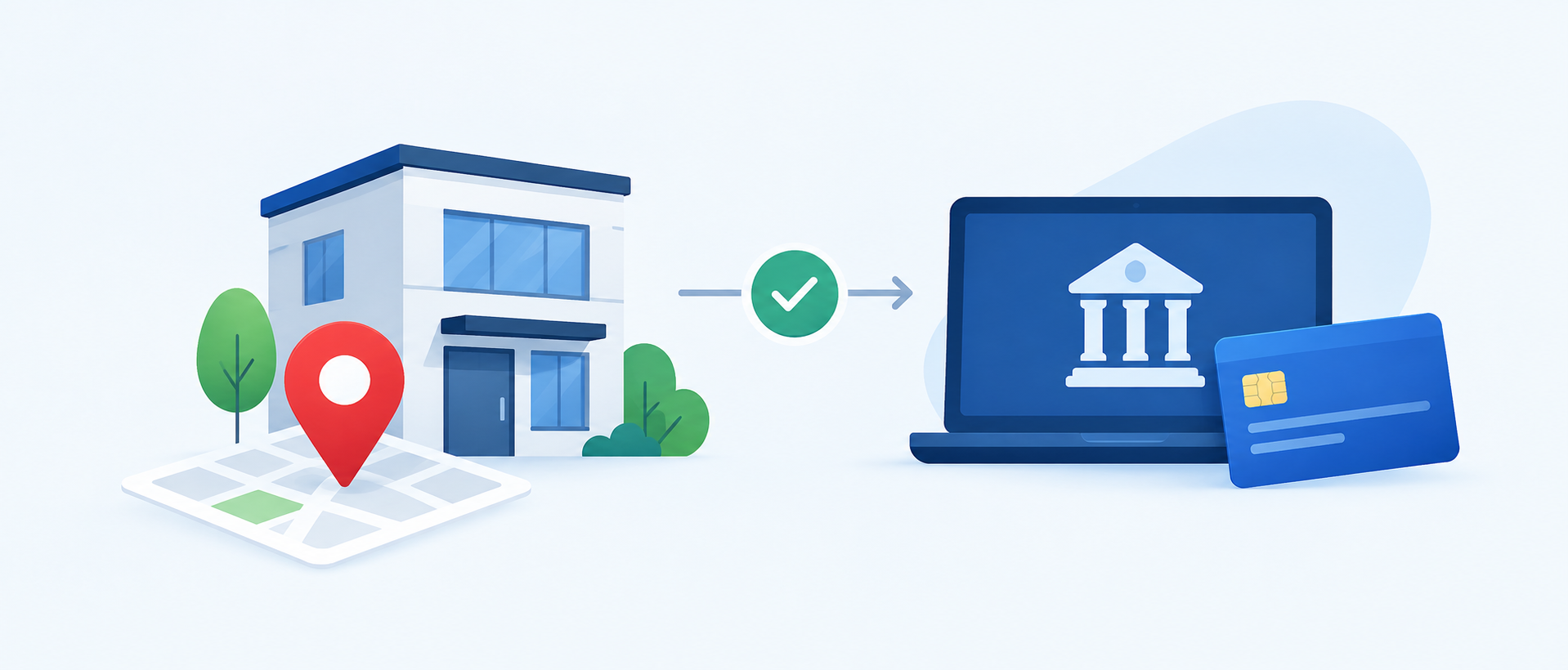
    However, during the account onboarding process, global founders frequently face an unexpected regulatory compliance barrier: the strict requirement to provide a verified Physical Business Address. Unlike basic mailing addresses or standard PO Boxes, digital banks enforce stringent address verification protocols mandated by the Bank Secrecy Act (BSA), FinCEN regulations, and global Anti-Money Laundering (AML) standards. Understanding what constitutes a valid physical address—and why financial institutions strictly enforce this rule—is essential for seamless banking approval.

    If you are seeking technical expertise to automate cross-border KYC pipelines, integrate banking APIs, or build foreign entity onboarding workflows, our specialized engineering team is ready to assist. Simply click the link at the bottom of the page to connect with our solutions team.

    Physical business address for US digital banking compliance guide by TY ALPHA TECHNOLOGY

    Decoding Address Types: Physical Location vs. Virtual Offices & PO Boxes

    To build a compliant US banking stack and avoid corporate account suspension, international business owners must distinguish between the various legal and operational address classifications:

    • Physical Business Address (Commercial Location):
      • The System: A physical, street-level geographic location (commercial office, leased desk, or verified operational facility) recognized by the United States Postal Service (USPS) database as a deliverable physical location.
      • Digital Banking Requirement: Mandatory. Federal Customer Identification Program (CIP) rules require financial institutions to verify where a business actually operates or maintains a physical presence.
    • Virtual Mailbox / Commercial Mail Receiving Agency (CMRA):
      • The System: A service that receives physical mail on behalf of a business, scans documents, and provides digital access online.
      • Digital Banking Requirement: Restricted. While essential for receiving corporate mail, standard CMRA addresses without a verified physical lease are automatically flagged by automated KYC banking software and rejected as primary operational locations.
    • P.O. Box (Post Office Box):
      • The System: A locked mailbox located at a USPS post office facility.
      • Digital Banking Requirement: Prohibited. Federal banking statutes explicitly forbid the use of P.O. Boxes as a primary physical business address for Customer Identification Program (CIP) compliance.

    Why FinCEN Compliance, AML Laws, and Risk Scoring Demand Physical Verification

    Digital banks are legally required under the USA PATRIOT Act and FinCEN guidelines to maintain robust Customer Identification Programs (CIP) and Know Your Customer (KYC) workflows.

    Because digital banks operate online without physical branches, regulatory authorities hold them to rigorous compliance standards regarding financial fraud prevention, shell company mitigation, and Anti-Money Laundering (AML) monitoring. Requiring a verified physical business address ensures that the entity has a verifiable real-world anchor, enabling automated compliance systems to cross-reference lease agreements, utility bills, and commercial database registries.

    At TY ALPHA, TECHNOLOGY, we architect secure digital compliance workflows and API data pipelines that streamline identity validation for global enterprises, ensuring long-term operational resilience.


    Structural Comparison: Physical Business Address vs. Alternative Address Options

    Evaluating the legal validity, banking acceptability, and primary utility of address types for US corporate setup:

    Address Type Physical Business Address Virtual Mailbox (CMRA) P.O. Box (USPS)
    USPS Classification Commercial / Residential Street Location Commercial Mail Receiving Agency Post Office Station Box
    Accepted for Bank KYC/CIP? Yes — 100% Accepted Conditional (Requires Lease Proof) No — Strictly Prohibited
    Proof of Address Documents Lease Agreement, Utility Bills, Office Proof Form 1583, Mail Receipts Box Rental Receipt
    Risk Score Level Low Risk (High Approval Rate) Medium/High Risk (System Flag Risk) High Risk (Automated Rejection)
    Primary Utility Bank opening, regulatory compliance, operations Mail scanning, general correspondence Basic personal/business mail reception

    Overcoming Onboarding Blockers: Automated Address Verification Systems

    Modern FinTech platforms and neobanks utilize automated identity validation APIs (such as Middledesks, Alloy, and Socure) connected directly to USPS databases, commercial registries, and credit bureaus. When an applicant enters an address, these engines instantly check the address flag attributes (e.g., CMRA flag, Residential vs. Commercial status).

    If a business submits a standard virtual address without supporting documentation—such as a physical lease agreement or utility bill—the system triggers an automated hold or immediate account rejection.

    By configuring a verified physical address solution supported by legitimate utility or commercial documentation early in the setup process, foreign founders can pass automated KYC scoring instantly and integrate seamlessly with payment processors like Stripe, Brex, and Mercury.


    The Strategic Advantage of Physical Compliance: Ensuring Operational Longevity

    Securing a legitimate physical business address eliminates the risk of sudden bank account freezes, payment gateway suspensions, and regulatory compliance audits.

    Investing in proper address infrastructure protects foreign businesses from unexpected service disruptions, ensuring uninterrupted access to global payment processing, corporate credit cards, and cross-border USD transfers.


    Physical Address Verification Roadmap: From Formation to Active Treasury

    To systematically set up your US address compliance and unlock digital bank accounts without friction, we follow a structured 6-step roadmap:

    1. Business Formation & Jurisdiction Selection

    We establish your legal business entity (LLC or C-Corp) in your chosen business jurisdiction.

    2. Physical Address Architecture & Lease Setup

    We secure a recognized, deliverable US physical address equipped with verifiable commercial utility support.

    3. USPS Form 1583 Commercial Authorization

    We notarize and submit federal postal authorization forms to legally enable commercial mail processing.

    4. Corporate IRS & EIN Registration

    We register your official physical address with the IRS during Employer Identification Number (EIN) issuing.

    5. KYC Documentation & Utility Audit

    We compile lease documentation, utility verifications, and passport identity records for bank submission.

    6. Digital Bank Submission & Account Activation

    We submit verified credentials through digital banking compliance pipelines to achieve full account activation.


    Ready to Secure Your Physical Address & Activate US Banking?

    Navigating physical address requirements and digital bank compliance as an international founder is seamless when backed by proper legal and technical frameworks.

    Whether you are an e-commerce operator, a SaaS startup founder, or a global agency scaling into the US market, we provide end-to-end technical and compliance infrastructure. From physical address verification pipelines to API-driven banking setups, we have you covered. The engineering team at TY ALPHA, TECHNOLOGY excels at building fast, robust, and compliant technical infrastructure designed for sustainable international expansion.