The Infrastructure Dilemma: How Server Architecture Re-engineers Digital Growth and Traffic Handling
For scaling retail founders, agile product developers, and digital marketing leads, establishing a stable,
high-performance web foundation has traditionally been a moving target. Managing sudden traffic spikes,
securing user data transactions, and ensuring low-latency page response times historically demanded complex,
localized server configurations. Today, choosing between Shared Hosting and a Virtual Private Server (VPS) has
completely defined this growth trajectory. At TY ALPHA, TECHNOLOGY, we recognize that while
starting on a basic hosting plan is highly cost-effective, smart business scaling requires understanding how
these underlying hardware layers integrate with your long-term digital architecture.
Modern web infrastructure relies on how physical server resources—such as CPU cores, RAM, and solid-state
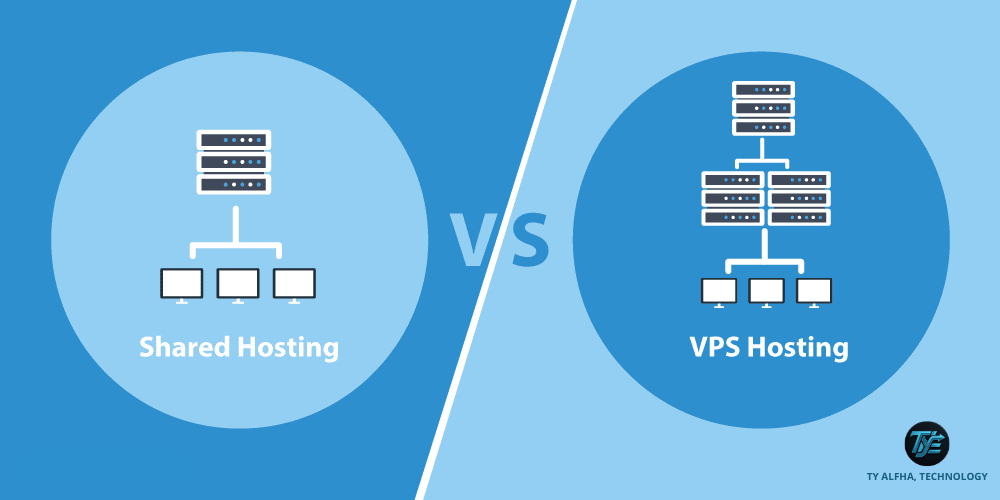
storage—are partitioned among global users. In a Shared environment, hundreds of websites pool from the exact
same resource pool, meaning an unexpected traffic surge on a neighboring site can instantly degrade your
site's loading speed. Conversely, VPS hosting utilizes virtualization technologies to carve out dedicated
hypervisors. Within seconds, this environment guarantees isolated system allocations, mimicking the
independence of a dedicated server without the enterprise price tag. This architectural shift enables growing
digital systems to transition seamlessly from a proof-of-concept landing page to a heavy, transactional
enterprise database.
However, leveraging advanced server systems effectively means looking beyond basic storage metrics. To ensure
that your web applications stand out with flawless uptime in a saturated online marketplace, creators must
evaluate how their hosting infrastructure handles root access privileges, dedicated IP reputations, and
scalable bandwidth throttling.