Why Cheap Hosting Hurts Business

    How slow servers cause potential customers to leave your online shop. Discover how sub-second delays degrade user trust, drag down search rankings, and quietly drain your promotional return on investment.

    The Cost of Low Cost: How Underpowered Servers Quietly Sabotage E-Commerce Revenue

    For aspiring retail founders, digital marketing leads, and growth managers, optimizing the front-end shopping experience is often the primary focus. Weeks are spent perfecting product photography, refining ad copy, and building sleek user interfaces. Yet, many businesses make a critical error that neutralizes all of this effort: deploying their storefront on a bargain, entry-level hosting plan. At TY ALPHA, TECHNOLOGY, we have observed that while a $3-per-month hosting package looks attractive on an early balance sheet, the hidden costs of slow page speeds, frequent server dropouts, and shared security vulnerabilities can quickly devastate a scaling business.

    Modern online shoppers demand immediate page loads. When a user clicks a promotional link or a social media ad, their expectation is sub-second responsiveness. On ultra-cheap shared hosting, your site lives on a server cramped with thousands of other websites, all fighting for the same CPU cores and RAM. If a neighboring site experience a traffic spike, your site’s Time to First Byte (TTFB) slows down instantly. This delay directly triggers shopping cart abandonment. Customers will not wait for slow product catalogs to load; they will simply close the tab and purchase from a faster competitor, turning your hard-earned ad spend into wasted capital.

    To run a highly profitable e-commerce channel, you must treat your hosting server as a core sales mechanism rather than a background utility. A slow server does more than just frustrate visitors—it damages your search engine visibility, lowers your conversion rates, and exposes your customer database to unnecessary security risks.

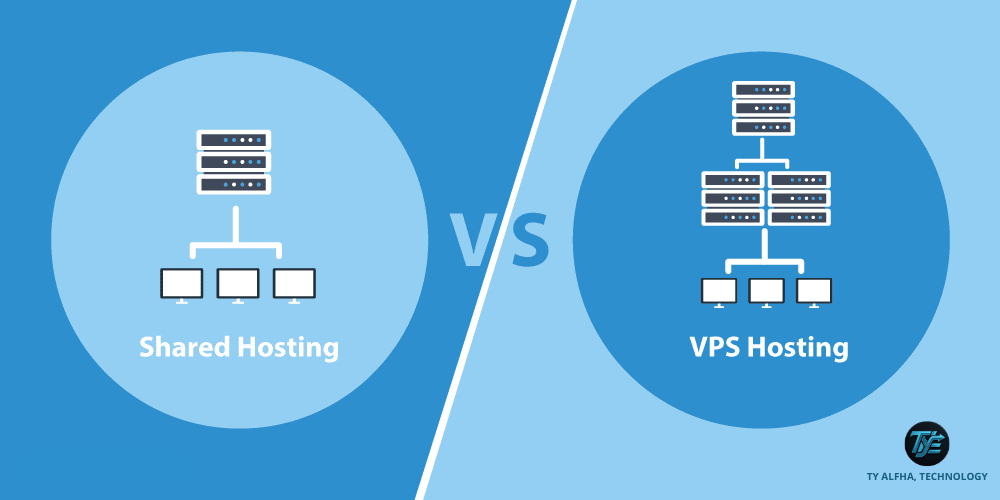
    Why Cheap Shared Hosting Hurts E-commerce Business by TY ALPHA TECHNOLOGY

    The Five Hidden Threats of Underfunded Hosting Environments

    Relying on low-tier, unoptimized hosting architectures exposes your digital storefront to several systemic risks:

    • Shattered First-Input Delay (FID) and Core Web Vitals: Search engines like Google penalize slow-loading sites. Cheap servers with poor processor allocation struggle to render complex scripts, dragging down your search engine rankings and organic traffic.
    • Shared IP Blacklisting Risks: On budget shared hosting, your site shares an IP address with hundreds of random accounts. If one of those sites sends spam emails or hosts malicious software, search engines and security software can blacklist your entire shared IP, hurting your domain reputation.
    • Severe Database Bottlenecks During Checkout: Processing a payment requires complex database operations. Budget servers lack the database resources needed to process multiple payment steps concurrently, leading to timed-out checkouts and lost sales.
    • Inadequate Security and Ransomware Vulnerabilities: Cheap hosting plans often cut corners on automated security patching and firewalls. A single security breach on a shared server can expose your user accounts and customer details to unauthorized third parties.
    • Unreliable Backups and Missing Disaster Recovery: When a database error or a bad plugin update breaks your storefront, you need a fast recovery path. Low-tier hosting plans rarely provide automatic hourly or daily backups, leaving your business vulnerable to complete data loss.

    The Performance Advantage: Boosting Conversions by Optimizing Your Infrastructure

    Investing in professional, high-quality hosting is not just about preventing downtime; it is a direct driver of conversion rate optimization. When your storefront operates on clean, dedicated resources (like a managed cloud node or a robust VPS), your checkout flows, image processing, and search scripts function instantaneously. This friction-free user journey keeps shoppers engaged, builds trust during payment steps, and ultimately maximizes your return on advertising spend (ROAS).

    By moving away from crowded, low-performance servers, you also gain access to advanced server caching configurations (such as Redis and Nginx optimization). This means your platform can comfortably handle traffic surges from email campaigns or influencer posts without crashing. At TY ALPHA, TECHNOLOGY, we help scaling brands choose and implement hosting solutions that keep their systems stable, fast, and secure through every sales campaign.


    The Cost-vs-Performance Comparison: Budget Hosting vs. High-Performance Environments

    This structured matrix illustrates the operational differences between cheap, over-allocated hosting and optimized, professional server environments:

    Infrastructure Feature Bargain Shared Hosting ($3–$10/mo) Optimized VPS / Cloud Hosting ($30+/mo)
    Resource Allocation **Communal Pool.** Resources are shared among thousands of sites, leading to unpredictable page speed drops. **Guaranteed Dedicated Resources.** Allocated CPU cores and NVMe SSD storage are reserved entirely for your storefront.
    Traffic Capacity **Low Threshold.** Sudden traffic spikes will overload the server, causing slow response times or temporary site suspensions. **Elastic Scaling.** Built to handle large crowds effortlessly, with options to scale up resources during busy sales.
    SEO and Search Rankings **Negative Impact.** Slow response times (TTFB) degrade Core Web Vitals, causing your site to slide down search rankings. **Search Optimized.** Fast server response times keep search engines happy, helping you maintain healthy organic rankings.
    Security Isolation **Vulnerable.** A security breach on a neighboring site on the same server can put your customer data at risk. **Fully Isolated.** Your virtual container has independent security layers, protecting you from cross-site vulnerabilities.

    Refining the Foundation: Why Premium Hardware Deserves Strategic Configuration

    A common trap for growing online retailers is thinking that upgrading to an expensive server will instantly solve all of their page-speed problems. While professional hosting provides the necessary foundation for a fast website, running unoptimized code, oversized images, and bloated third-party tracking scripts will still slow down your store. If your site code is inefficient, a more expensive server is only a costly patch for a deeper technical issue.

    To transform your storefront into a fast, reliable sales platform, your development team should combine robust hosting with rigorous front-end optimization. This means optimizing image sizes, utilizing modern web formats like WebP, streamlining database tables, and implementing smart caching rules. By combining clean site design with a powerful, dedicated hosting environment, you protect your promotional margins, maximize site speed, and guarantee a seamless checkout experience for every single buyer.


    Migrating Away from Cheap Hosting: A 6-Step Implementation Guide

    To move your online store away from low-performance servers and transition to a fast, reliable hosting environment, follow these six steps:

    1. Audit Your Current Server Metrics and Load Times

    Use diagnostic tools to measure your site's current Time to First Byte (TTFB), overall page load times, and resource usage during peak traffic.

    2. Calculate Your True Bandwidth and Storage Needs

    Review your traffic logs and database size to select a hosting plan that offers plenty of memory and processing power for your current and near-future needs.

    3. Select an Isolated, Managed Hosting Solution

    Choose a managed VPS or a dedicated cloud hosting plan that isolates your data and resources from other sites, giving you full control over your environment.

    4. Schedule Your Data Migration During Off-Peak Hours

    Transfer your files, emails, and database tables to the new server during your lowest traffic hours to minimize any disruption to your active customers.

    5. Implement Modern Caching and Content Delivery Networks

    Set up advanced object caching (like Redis) and connect your site with a reliable global CDN to ensure rapid, secure page delivery to international visitors.

    6. Set Up Independent Uptime and Performance Monitoring

    Configure automated, external monitoring tools to track your site's uptime and alert your team immediately if any performance bottlenecks arise.


    Ready to Build a High-Performance, Secure Digital Presence?

    Upgrading to a professional, scalable hosting solution is a critical milestone for growing online stores—it protects your marketing investments, keeps your storefront fast and responsive during busy sales events, and provides a smooth shopping experience that turns visitors into loyal customers.

    If your business requires a reliable cloud migration strategy, help setting up advanced database replication, or professional assistance managing dynamic, auto-scaling hosting environments, we are ready to support you. The engineering team at TY ALPHA, TECHNOLOGY specializes in keeping complex digital systems fast, stable, and highly secure, helping corporate leaders build robust, scalable e-commerce platforms designed for long-term commercial growth.