Building Brand vs Marketplace Selling

    Why building an independent online storefront creates long-term business value and secures your digital enterprise valuation.

    Beyond the Transaction: Shifting from Marketplace Arbitrage to Genuine Brand Equity

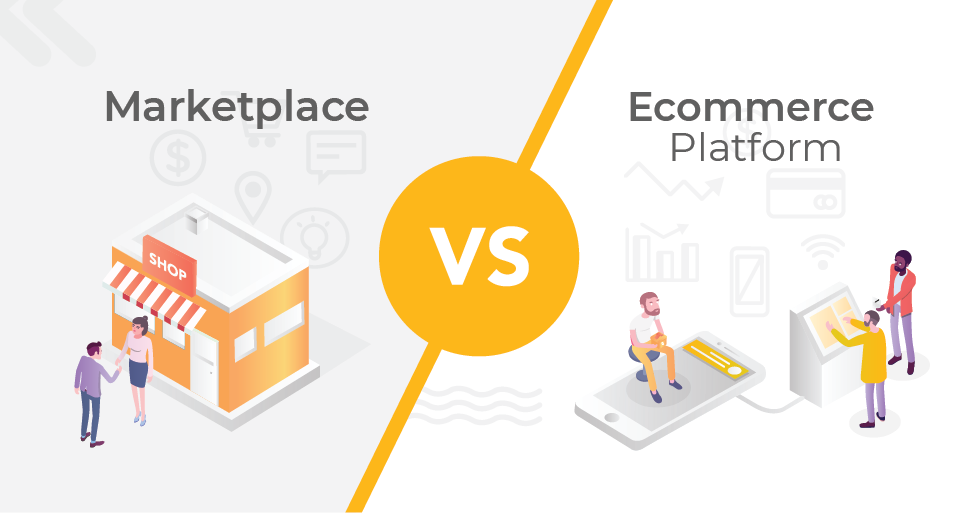
    In the early stages of an e-commerce venture, it is easy to conflate transaction volume with business strength. Generating thousands of orders a month on third-party marketplace networks creates an illusion of stability. However, a business model that relies entirely on an external platform is not a resilient company—it is a distribution channel. You are fundamentally renting a shelf in someone else's supermarket, subject to their pricing rules, visual restrictions, and changing algorithms.

    To build a digital asset that holds enterprise value, commands premium pricing, and attracts investors, you must move beyond transactional churn. Real value lies in brand building. Transitioning to an independent, custom online storefront allows you to control the customer experience, capture first-party data, and foster genuine, repeatable customer loyalty. An independent storefront transforms your operations from a price-sensitive product listing into a secure, self-sustaining financial asset.

    At TY ALPHA, TECHNOLOGY, we help ambitious merchants escape platform dependency. We design and launch optimized e-commerce architectures that protect your margins, secure your customer relationships, and unlock long-term brand equity.
    Comparing long-term value of building an independent brand vs selling on third-party marketplaces by TY ALPHA TECHNOLOGY

    The Structural Differences Between Transactional and Equity-Driven Models

    Evaluating how your business handles customer value reveals the clear operational divide between marketplace dependency and brand ownership:

    • The Independent Brand Asset (Your Owned Storefront):
      • The System: Launching a dedicated digital storefront (e.g., Shopify, WooCommerce, or a custom application) where you own the domain, database, and front-end interface.
      • Why it's Best: You hold direct, unmasked relationships with your customers. You can personalize product offerings, design custom subscription tiers, run targeted email campaigns, and increase your Customer Lifetime Value (LTV) without paying platform taxes.
    • The Rented Shelf (Marketplace Selling):
      • The System: Listing products under a standardized template on centralized third-party shopping search engines.
      • Why it Hurts: Shoppers rarely buy from "you" on a marketplace; they buy from the platform. Because you cannot capture emails or build an organic connection, you are trapped in a high-friction environment, constantly paying search ads to reach your own audience.
    • Enterprise Valuation and Exit Potential:
      • The System: How private equity firms and buyers value digital retail companies.
      • The Reality: Investors pay significantly higher valuation multiples for brands with strong organic traffic, direct customer databases, and proprietary brand recognition compared to high-volume marketplace accounts that can be shut down by a single algorithm change.

    Why First-Party Brand Ownership Protects Your Bottom Line

    An online business that maintains **absolute control over its brand identity and customer data** functions as a highly secure, margin-optimized company. When you rely entirely on marketplace channels, you are constantly vulnerable to external pricing pressures. Competitors can bid on your brand keywords, display cheaper copycats directly on your listing pages, and trigger price wars that erode your margins.

    By channeling your marketing efforts toward an independent storefront, you eliminate these distractions. Your custom website is a dedicated, secure space focused solely on your brand story and product ecosystem. This control allows you to charge premium prices based on trust and loyalty, rather than competing solely on price.

    At TY ALPHA, TECHNOLOGY, we design high-performance digital architectures that protect your business from platform dependency. We build the fast Shopify sites, secure databases, and advanced analytics tracking needed to scale your independent brand.


    The Equity Matrix: Comparing Independent Brand Assets and Marketplace Listings

    Understanding how each model handles long-term value highlights the benefits of transitioning to an independent web storefront:

    Business Dimension Third-Party Marketplace Selling Independent Brand Storefront
    Customer Relationship Masked; the platform owns the customer profile and restricts follow-up marketing. Direct; you capture emails, phone numbers, and full purchase histories.
    Pricing & Margin Power Weak; fierce competitor price-matching and high commission fees limit profits. Strong; premium pricing based on brand authority, with low processing fees.
    Marketing Efficiency Low; must repeatedly pay for paid search listings to capture repeat customers. High; run free retention flows, loyalty programs, and personalized email marketing.
    Platform Stability Vulnerable; listings are subject to sudden suspensions or policy changes. Total; you own the codebase and domain, ensuring absolute operational control.
    Enterprise Valuation Multiples Lower multiples; buyers view single-channel reliance as a high-risk investment. Higher multiples; direct customer data and brand loyalty command top-tier pricing.

    Optimizing Brand Performance: Matching Marketplace Speeds to Retain Customer Attention

    A key reason consumers trust marketplaces is their frictionless buying process—pages load instantly, and checkouts take a single tap. When moving customers to your independent storefront, matching these speed standards is critical. If your standalone custom website is slowed down by unoptimized images or clunky code configurations, your page speeds will drop, causing impatient mobile visitors to bounce.

    To ensure your independent site rival the performance of enterprise platforms, we optimize code delivery at every level. We apply lazy-loading rules to high-definition assets, compress product images into modern WebP formats, and configure third-party scripts to run asynchronously. This keeps your standalone store fast and responsive on mobile devices, delivering the sub-second page loads required to maximize checkout conversions.

    Combining ultra-fast web development with an independent payment pipeline gives your small business a powerful competitive advantage. This performance-first approach ensures your brand remains highly visible, loads instantly, and captures full profit margins free from external platform taxes.


    The Long-Term Value of Direct-to-Consumer Ownership: Securing Capital Health

    Relying exclusively on third-party marketplace channels leaves your business vulnerable to systemic financial strain. True operational health is achieved when you shift your primary digital focus from a renting model to an owning model. While marketplace fulfillment centers are useful for liquidating excess stock or running high-volume introductory sales, anchoring your scaling enterprise on a fast, modern Shopify or independent custom store layout ensures you build real, defensible brand equity that retains its value over time.

    When your fast site speeds, custom brand experiences, and direct payment pathways operate in perfect harmony, the true profitability of your business unlocks naturally. Worldwide buyers purchase with total confidence, customer lifetime retention increases, and margin leakage is completely eliminated. Our development approach balances clean code optimization with direct-to-consumer data strategies to keep your online business highly profitable and fully independent.


    Our Structured Transition Roadmap: From Marketplace Renting to Storefront Ownership

    To systematically transition your products from fee-heavy marketplace listings over to an ultra-fast, high-margin independent storefront without losing sales momentum, we execute a clear 6-step roadmap:

    1. Portfolio & Margin Analysis

    We review your product metrics, identify your best-performing SKUs, and calculate your direct-to-consumer margin potential.

    2. Fast Independent Storefront Architecture

    We design a custom, high-speed storefront built to reflect your unique brand identity and optimized for mobile checkout conversions.

    3. First-Party Data Integration

    We configure robust analytics tracking tools and secure database connections to collect complete customer profiles on your site.

    4. Direct Fulfillment Mapping

    We connect your backend inventory tools to private, cost-effective logistics hubs, ensuring fast shipping times without marketplace premiums.

    5. Native Checkout & Retention Setup

    We integrate local, trusted payment solutions and set up automated, post-purchase email flows to cultivate direct customer loyalty at zero added cost.

    6. Launch Optimization & Velocity Tuning

    We audit page load performance and run end-to-end purchase tests on mobile devices to ensure a smooth, ultra-fast launch that captures full profit margins.


    Need Assistance Optimizing Your E-Commerce Layout or Designing a Custom Online Store?

    Transitioning from a basic webpage to a fully optimized, high-converting retail storefront is a major milestone—it is a bold step toward financial independence, brand recognition, and tapping into a global network of digital consumers.

    Whether you are building on Shopify, WooCommerce, or developing a fully custom e-commerce system, we are here to support your growth. If you run into any technical layout conflicts, require assistance connecting complex regional payment gateways, or want professional advice on accelerating your store’s loading speeds, we have you covered. The team at TY ALPHA, TECHNOLOGY specializes in keeping digital architecture clear, simple, and perfectly secure, helping global entrepreneurs build robust online ecosystems designed for sustainable international scaling.