How Long to Register Domains?

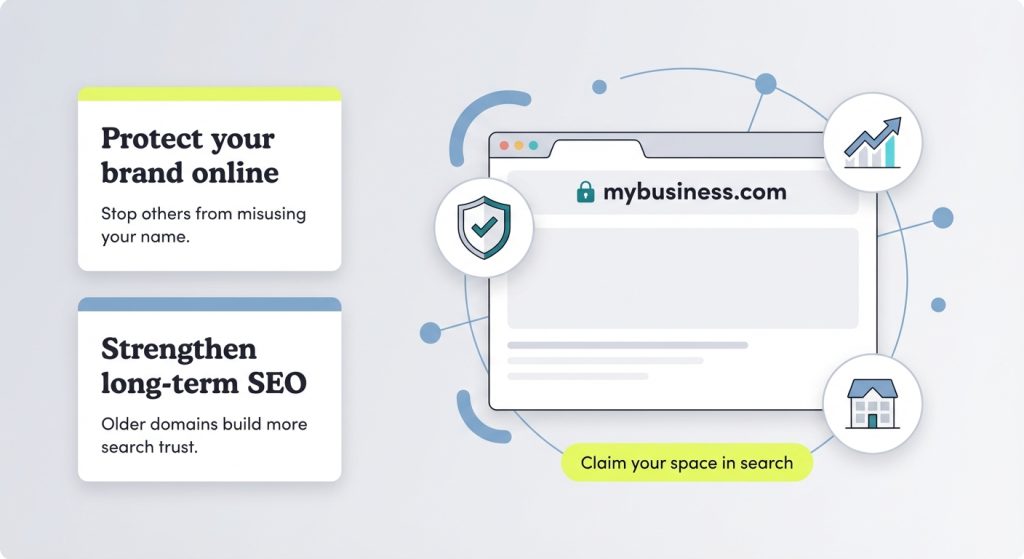
    Decide if registering names for multiple years benefits your brand authority. Analyze the algorithmic trust signals, calculate long-term financial forecasting, and determine the optimal registration length to protect your digital real estate from accidental expiration.

    The Commitment Signal: How Domain Registration Length Impacts Your Digital Footprint

    For enterprise web administrators, scaling e-commerce brands, and digital-first founders, purchasing a domain name is the first step in claiming your piece of the internet. However, once you find the perfect name, you are instantly faced with a critical setting at checkout: how many years should you register it for? While most registrars default to a standard 1-year lease, choosing this short-term option can introduce subtle risks to your brand's growth. At TY ALPHA, TECHNOLOGY, we have proven that your domain registration length acts as a direct indicator of your business's stability, both to search engine algorithms and to your target market.

    A domain name is not a permanent purchase; it is an annual lease managed through global registry databases. When a company registers its primary domain for only 12 months at a time, it signals a short-term outlook. Shady websites, temporary spam blogs, and throwaway landing pages are almost always registered for the absolute minimum duration to keep upfront costs low. By choosing a multi-year registration of five to ten years instead, you immediately separate your brand from temporary websites, signaling to search engines that your business is stable, legitimate, and built for long-term operations.

    Yet, deciding on the ideal registration length involves more than just selecting a number at checkout. To maximize your digital assets, your team must analyze how registration length impacts your search engine optimization (SEO), calculate renewal cost savings, and protect your domain against catastrophic administrative failures.
    How Long to Register a Domain Guide by TY ALPHA TECHNOLOGY

    The Five Technical Pillars of Domain Registration Length

    To evaluate whether a multi-year domain lease is the right strategic move for your brand’s digital infrastructure, analyze these five core pillars:

    • Algorithmic Trust and Legitimacy: Signaling long-term stability to search engines like Google, which use domain expiration dates as a minor ranking factor to weed out temporary spam networks.
    • Inflation and Price-Lock Protection: Securing current registry pricing for up to a decade, completely shielding your business from annual registrar price hikes and administrative fee increases.
    • Accidental Expiration Defense: Eliminating the risk of losing your core brand domain due to expired corporate credit cards, failed auto-renewals, or missed administrative emails.
    • Brand Defensibility and Squatting Prevention: locking down your primary digital asset for multiple years to deter competitors or squatters who track upcoming expiration dates to hijack dropping domains.
    • Financial and Accounting Simplicity: Consolidating your web asset expenses into a single, predictable upfront payment, simplifying your marketing and IT budget forecasting for years to come.

    The Protection Advantage: Eliminating the Nightmare of Accidental Expirations

    The most urgent and practical reason to opt for a multi-year domain registration is to prevent accidental expiration. Every year, thousands of established businesses suffer sudden, embarrassing website and email outages because their domain registration lapsed. This usually happens when the employee who registered the domain leaves the company, or when the billing credit card on file expires.

    When a domain expires, your website immediately goes dark, your corporate email routing breaks, and your brand's reputation takes an instant hit. Worse, if the domain is not reclaimed during the grace period, it can be snapped up by domain brokers who will charge thousands of dollars to sell it back to you. Registering your core assets for 5 to 10 years completely removes this risk, giving your IT team peace of mind and keeping your business running smoothly. At TY ALPHA, TECHNOLOGY, we guide scaling businesses to implement secure, multi-year domain strategies that protect their digital assets from administrative oversights.


    The Domain Term Matrix: 1-Year vs. Multi-Year Registration

    This structured matrix compares the operational security, search engine signals, and financial impact of short-term registrations against a long-term commitments:

    Strategic Metric 1-Year Domain Registration (Short-Term) 5 to 10-Year Domain Registration (Multi-Year)
    Algorithmic Trust Signal **Neutral/Standard.** Mimics the registration patterns commonly used by temporary affiliate blogs, landing pages, and spam networks. **Strong Authority Signal.** Demonstrates a serious, long-term brand commitment, helping build trust with search engines over time.
    Financial Predictability **Vulnerable to Inflation.** Exposed to annual registry price increases, changing exchange rates, and unexpected registrar markups. **Guaranteed Price Lock.** Locks in your current registration cost for the entire duration, protecting your budget from future price hikes.
    Billing & Expiration Risk **High Operational Risk.** Vulnerable to failed auto-renewals, expired credit cards, and missed email warnings. **Near-Zero Operational Risk.** Administrative overhead is minimized, requiring billing updates only once or twice a decade.
    Portfolio Management **High Maintenance.** Requires constant tracking and annual check-ins, adding hassle if you manage dozens of brand variations. **Set-and-Forget Efficiency.** Simplifies portfolio management, letting you focus resources on building your core products.

    Refining the Infrastructure: Why Long-Term Domains Need High-Speed Performance

    A common mistake for scaling brands is locking in a multi-year domain registration but leaving the website hosted on slow, outdated servers. While a 10-year domain registration signals stability to search engines and protects your brand from expiration, it cannot make up for poor user experiences. If your online store or corporate portal takes forever to load, visitors will leave, and your long-term domain asset will struggle to reach its full SEO potential.

    To transform your long-term domain into a high-performance business engine, your team must pair it with optimized hosting systems. This means hosting your site on modern, fast servers, utilizing global Content Delivery Networks (CDNs), and keeping your DNS configurations clean and secure. By combining the safety of a multi-year domain lock with a fast, responsive website, you protect your brand's presence, maximize your SEO trust, and build a reliable digital storefront that customers can trust for years to come.


    Securing and Planning Your Domain Life Cycle: A 6-Step Strategy

    To audit your active domains, assess your renewal costs, and lock down your digital assets for the long term, follow these six steps:

    1. Categorize Your Active Domain Portfolio

    Divide your domains into "Core Brand Assets" (your primary website addresses) and "Supporting Assets" (temporary landing pages and minor typo variations).

    2. Extend Core Brand Registrations to 5-10 Years

    Access your domain registrar dashboard and manually extend your primary domains to the maximum duration to lock in rates and secure your brand.

    3. Keep Supporting Domains on Short-Term Cycles

    Keep your non-essential marketing domains on a 1-to-2-year registration cycle to keep your budget flexible and avoid paying for unused assets.

    4. Verify That Free Lifetime WHOIS Privacy is Enabled

    Ensure your registrar includes free, permanent privacy protection for the entire length of your multi-year registration to block spammers.

    5. Set Up Redundant Billing and Account Backups

    Add a backup credit card to your registrar account and list secondary admin emails to make sure you never miss a critical account notification.

    6. Turn On Account-Level Transfer Locks

    Activate registry locks on all long-term domains to prevent any unauthorized transfer attempts while your team focused on growing the business.


    Ready to Secure Your Brand's Digital Assets for the Long Term?

    Registering your primary domain names for multiple years is a smart strategic move—it locks in your costs, protects your website from accidental expiration, and signals solid commitment to search engines and customers alike.

    If your business requires a professional domain migration strategy, help managing a complex corporate domain portfolio, or expert engineering support to set up fast DNS infrastructures, we are here to assist you. The development and optimization team at TY ALPHA, TECHNOLOGY specializes in keeping complex online systems fast, reliable, and highly secure, helping corporate leaders build robust web architectures designed for long-term growth.